
Inside the Abedin–Clinton Islamist Network
Most Americans think of politics in terms of elections, speeches, and policy votes. But power—especially foreign influence—rarely works that way. It moves quietly through family ties, academic institutions, charities, advisors, donors, and long-standing trust networks.
This article maps one such network.
The Hillary-Huma Connection
Huma Abedin was not just a staffer. She was Hillary Clinton’s closest aide for nearly two decades—a gatekeeper, confidante, and fixer who followed Clinton from the White House to the State Department. Few unelected people in modern American politics have had that kind of long-term, close access to power.
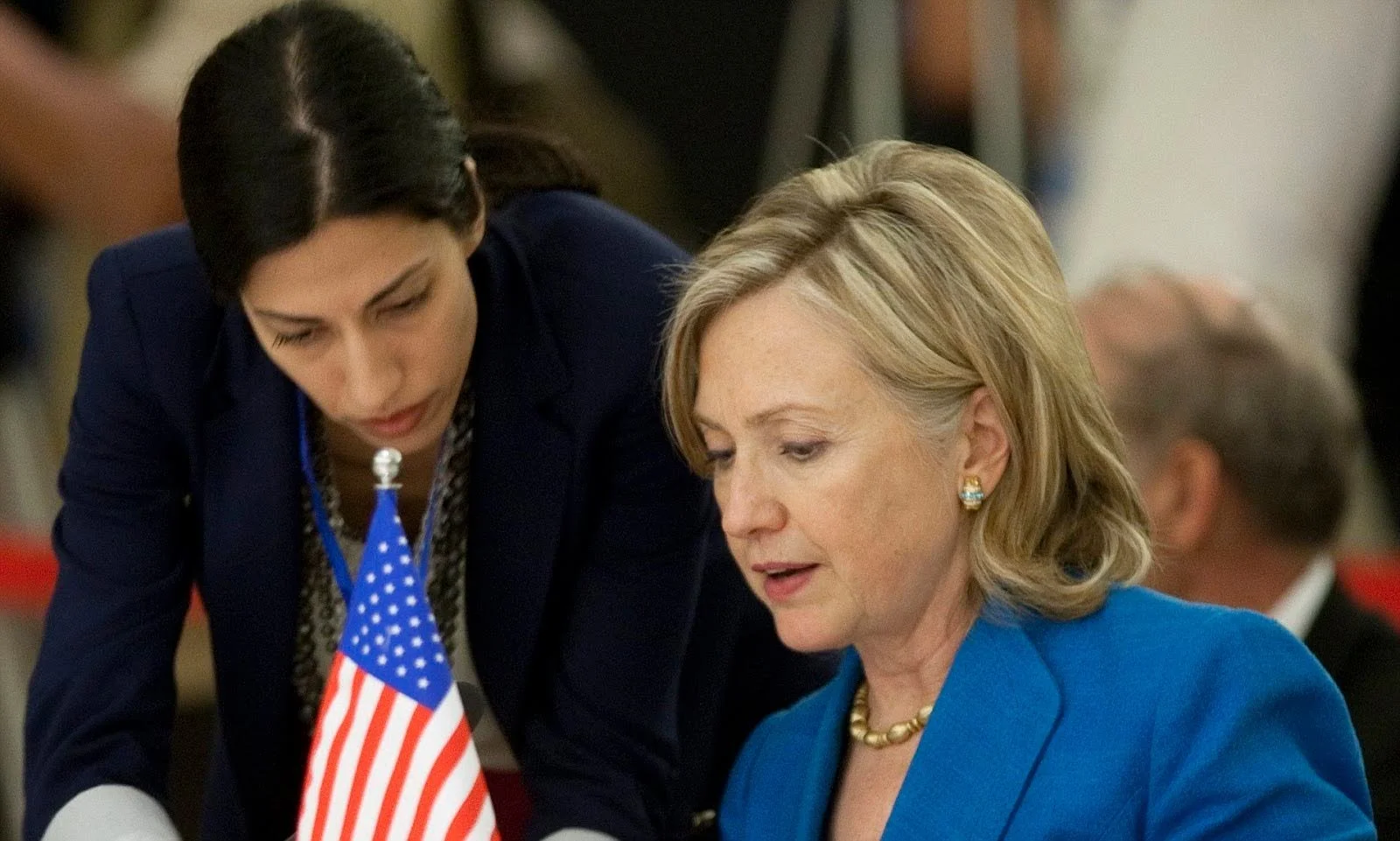
Abedin’s personal life also reflects her place within elite influence circles. Her marriages—to former Congressman Anthony Weiner and, more recently, to Alex Soros, chair of the Open Society Foundations—highlight her continued proximity to political power, global philanthropy, and elite networks.
This scrutiny exists for a reason. Abedin’s family was deeply involved in a transnational Islamist intellectual world, parts of which were later identified by Western governments as terror-financing or extremist-linked networks. These were not fringe groups operating in the shadows. They were well-funded, well-connected institutions that presented themselves as academic, charitable, and humanitarian… until many were later exposed.
Step One: The Ideological Root
Jamaat-e-Islami → Muslim Brotherhood → A Global Islamist Network
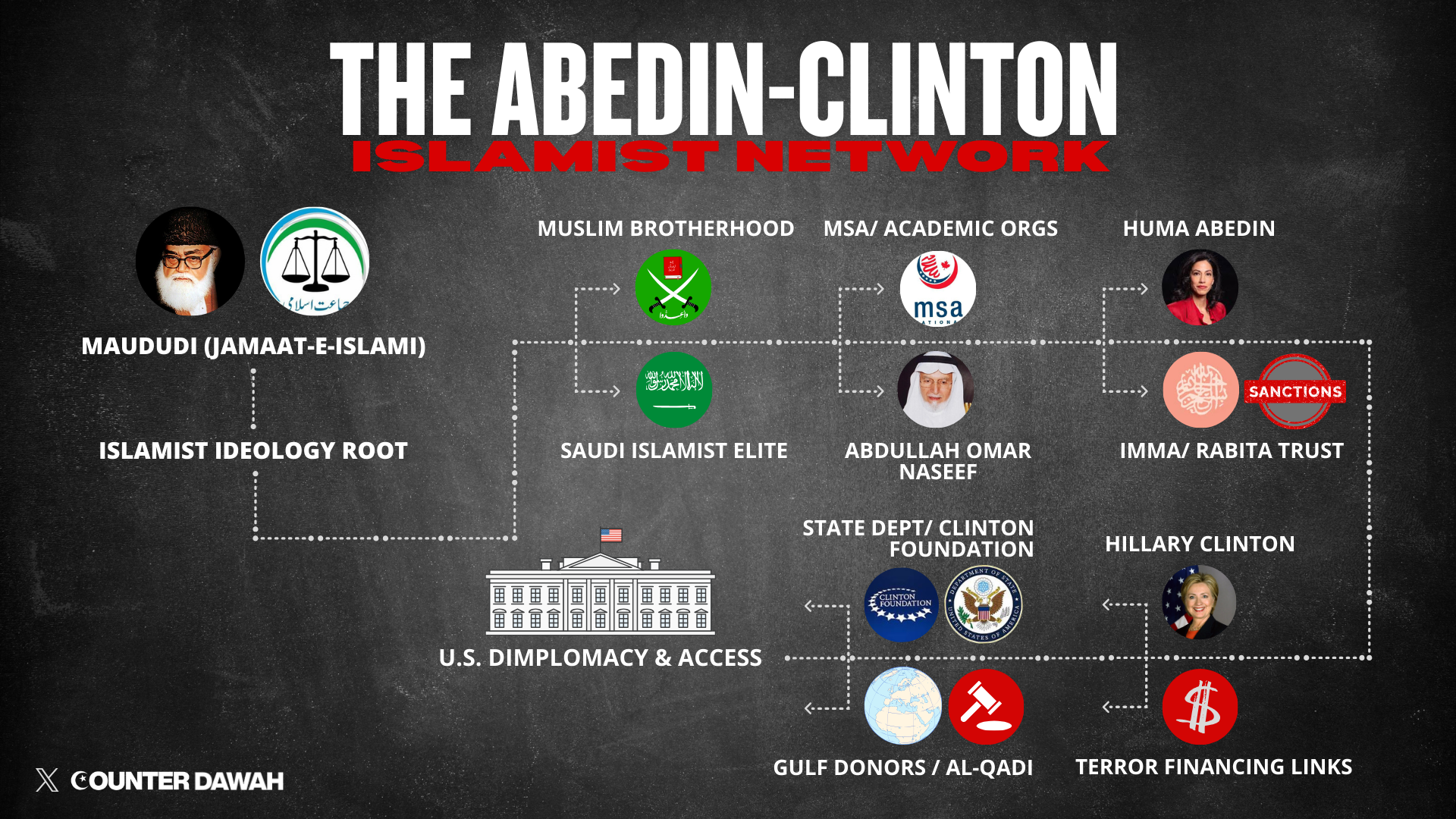
At the center of this story is Islamism. Not Islam as a religion, but Islamism as a political belief system. This idea didn’t emerge by accident. It was developed, organized, and spread intentionally.
One of the earliest and most influential thinkers behind it was Abul A’la Maududi, who founded Jamaat-e-Islami (JI) in 1941. Maududi argued for a theocratic Islamic state, governed entirely by Sharia law, where religion and government are inseparable.
Most Americans have never heard of Maududi or Jamaat-e-Islami—and that’s a problem. Jamaat-e-Islami is one of the most influential Islamist movements of the past century, with an ideology that continues to shape political currents well beyond South Asia. More troubling still, Maududi’s granddaughter, Sophia Farooq, ran for chair of the Cobb County GOP in Georgia in 2025. While she presented herself as a fresh, grassroots conservative voice, her family’s deep ties to Jamaat-e-Islami went largely unexamined.
To learn more about what happened in Georgia—and why it matters—we recommend reading our full report: Sophia Farooq: The Invisible Candidate of the Cobb County GOP Race.
Many analysts view Jamaat-e-Islami as a blueprint movement. Its ideas, writings, and organizational model heavily influenced later Islamist groups, including the Muslim Brotherhood.
Side note: Jamaat-e-Islami is complex, global, and deserves its own deep dive. For readers who want a fuller explanation of its history, structure, and documented links to extremism, we strongly recommend this detailed breakdown: Jamaat-e-Islami: The Global Movement
Step Two: Huma Abedin’s Family History
Huma Abedin didn’t grow up in an ordinary American household. Her family has spent decades at the center of a global Islamist intellectual and organizational network.
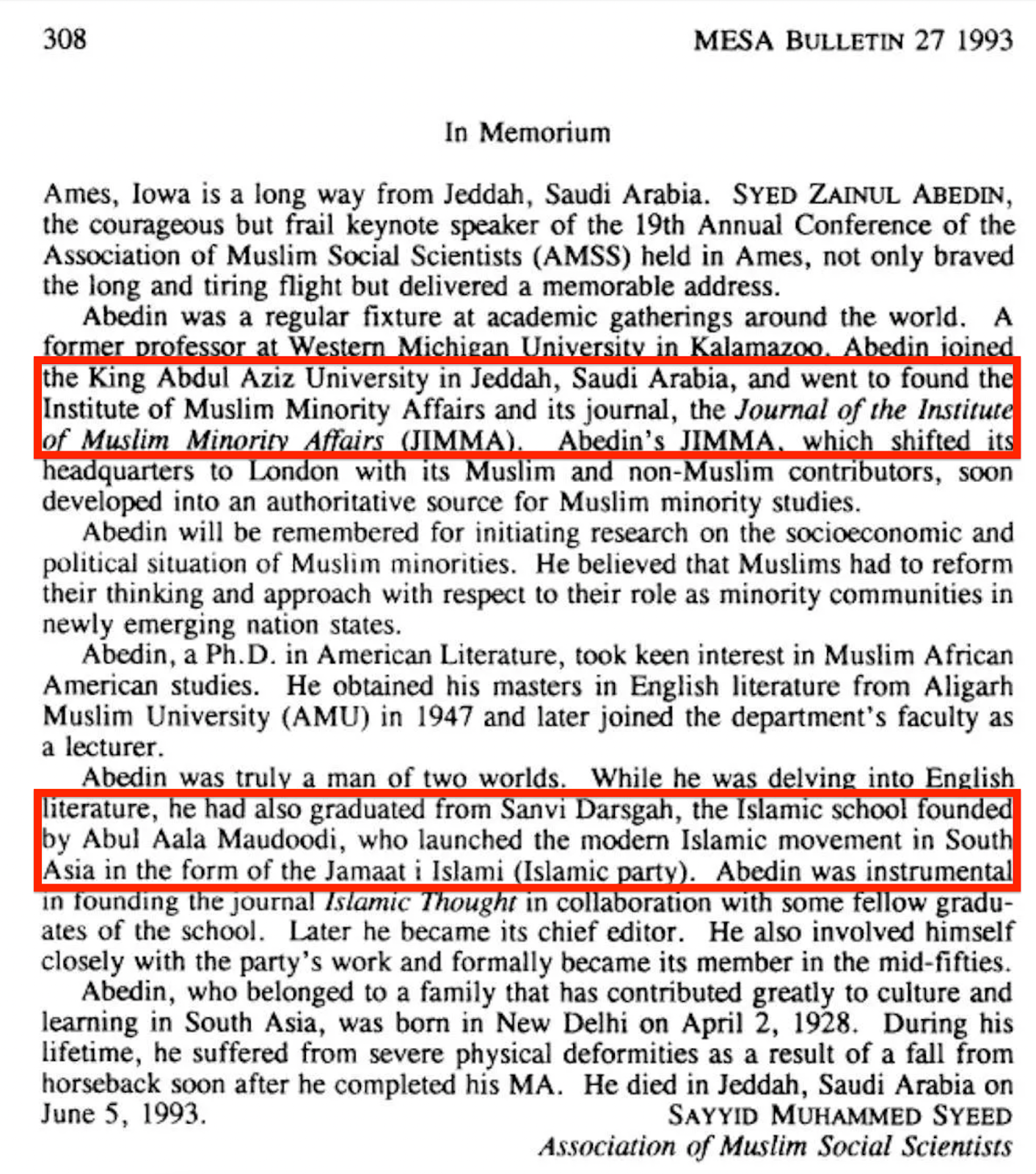
Her Father: Syed Zainul Abedin
Born in Delhi, India, and later an alumnus of Aligarh Muslim University.
Went on to earn a Ph.D. at the University of Pennsylvania, where he met Saleha Mahmood.
Lifelong advocate of Islamist political theory, educated at Maududi’s school, absorbing the ideas of a theocratic Islamic state.
With the support of Abdullah Omar Nasseef, then president of King Abdulaziz University in Saudi Arabia, Syed founded the Institute of Muslim Minority Affairs (IMMA) in Jidda.
Became the first editor of the Journal of Muslim Minority Affairs, a think tank and publication dedicated to “shedding light” on Muslim minority communities worldwide.
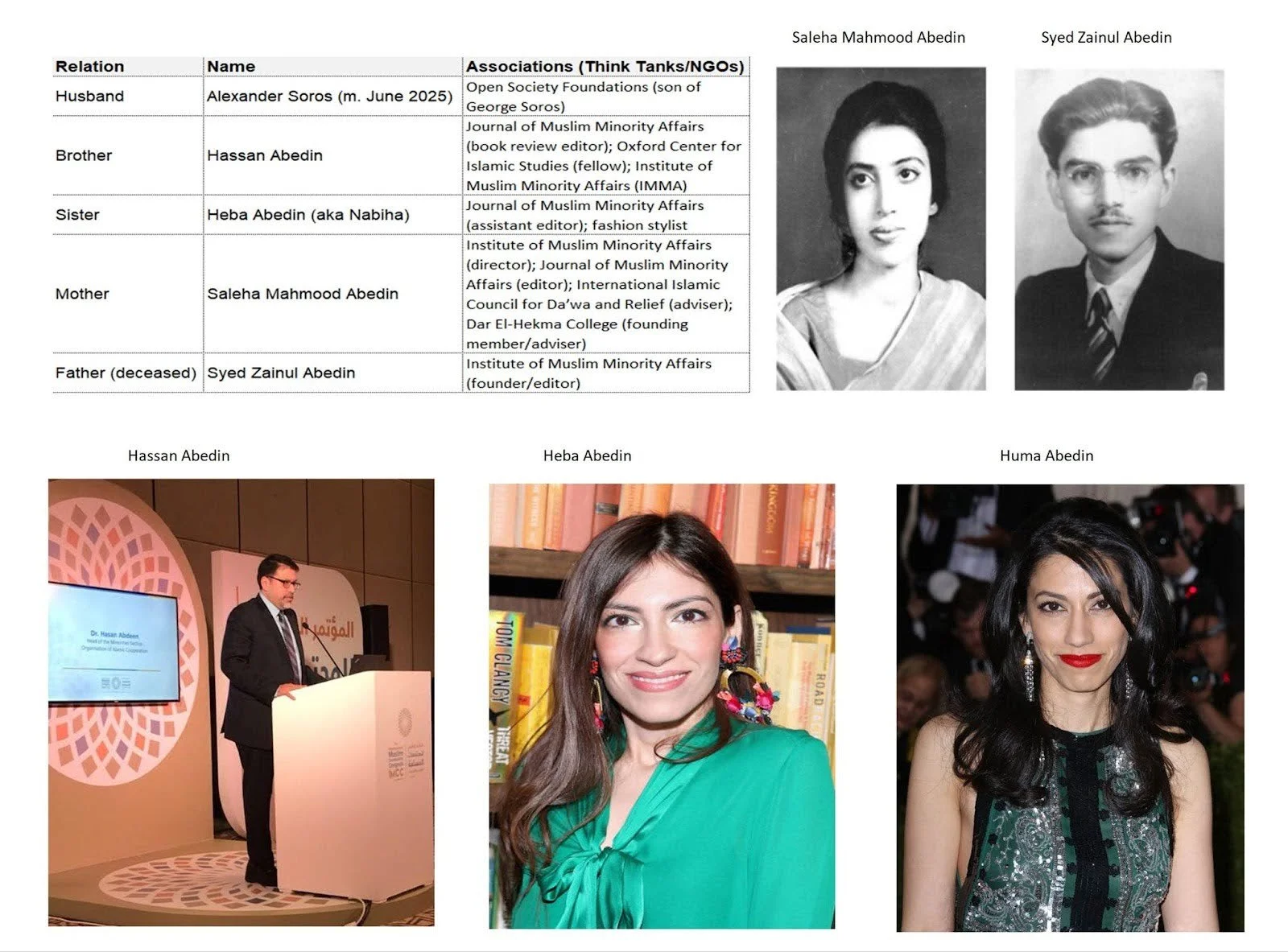
After his death in 1993, his wife, Saleha, took over as director of IMMA and editor of the Journal, positions she still holds. The Journal remains a family enterprise:
Huma Abedin worked as assistant editor of IMMA from 1996 to 2008.
Her brother Hassan is a book review editor and fellow at the Oxford Center for Islamic Studies, where Nasseef serves as chairman of the board of trustees.
Her sister Heba is also an assistant editor.
While still a college student Huma was active in the Muslim Student Association (MSA). The MSA presents as a normal campus religious group. Historically, however it grew directly out of Muslim Brotherhood organizing in the U.S.
h/t @ IamTheStory__
Her Mother: Saleha Mahmood Abedin
Saleha Mahmood Abedin didn’t just come from a well-off family in India—her father was a civil servant under the Nizam of Hyderabad—but she carved out a global role in Islamist networks that few Americans would ever guess. She rose to become a senior leader in international Islamist women’s organizations and chaired groups under the International Islamic Council for Da’wah and Relief (IICDR).
Here’s where it gets striking: the IICDR later became a founding member of the Union of Good, a network that the U.S. Treasury officially banned for funneling money to Hamas-linked causes.
And it doesn’t stop there. Saleha also founded and served as Vice-Dean of Dar al-Hekma College, a women-only institution in Saudi Arabia. One of the college’s trustees? Abdullah Omar Nasseef—[will get to him in the next section] but you should know he was co-accused in the U.S. Holy Land Foundation terrorism financing case and was a long-time leader of the Muslim World League.
Put it all together: while Hillary Clinton was running the State Department, her top aide’s mother was leading institutions deeply tied to networks later flagged as terror financiers.
Step Three: The Financier Behind the Curtain
Abdullah Omar Nasseef was a Saudi Islamist powerbroker who simultaneously occupied leadership roles across religious, academic, and charitable institutions. He served as a senior figure in the Muslim World League, helped found and support multiple Islamic charities, and sat on boards tied directly to the Abedin family’s work—including IMMA and Dar al-Hekma College. His backing was instrumental in giving these institutions legitimacy, funding, and international reach.
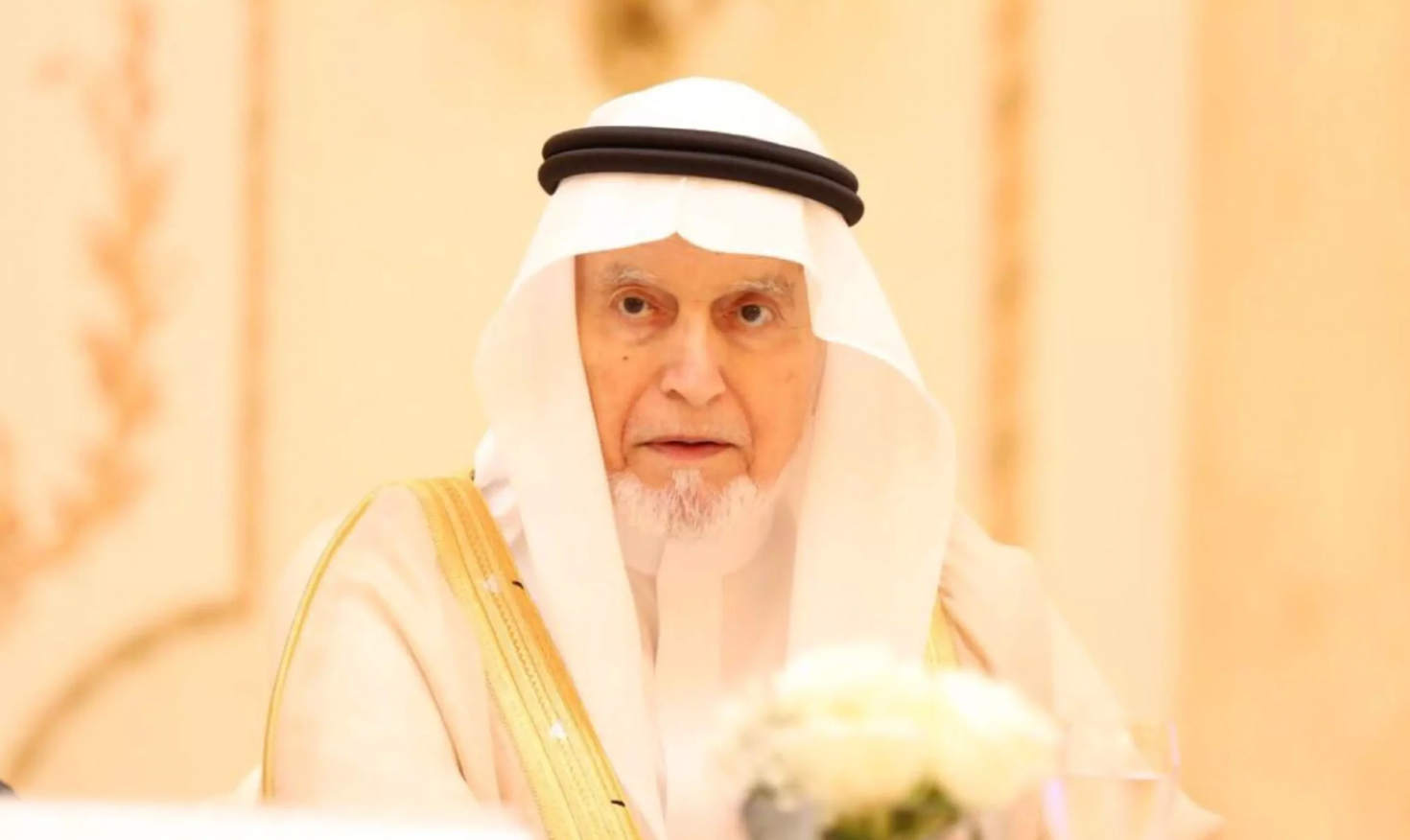
What makes Nasseef so significant is not any single role—but the pattern. He appears again and again at the intersection of organizations that presented themselves as scholarly or humanitarian, while related entities were later designated or investigated for terror financing, including the Rabita Trust and networks connected to the Holy Land Foundation case. These were not isolated misunderstandings. They were part of a recurring structure: the same names, the same boards, the same funding pathways—rebranded across borders and missions.
Nasseef represents how influence actually works in transnational Islamist networks: not through overt violence, but through patronage, institutions, and respectability.
Step Four: The Clinton Foundation Money Trail
At the same time Hillary Clinton was running U.S. foreign policy, the Clinton Foundation was receiving tens of millions of dollars from foreign governments in the Middle East.
These included:
$10–25 million from Saudi Arabia
Millions more from Qatar, the UAE, and Oman
All are U.S. allies. All are also major patrons of Islamist movements, religious institutions, and charities across the region.
Some of these donations were:
Improperly disclosed
Received while Clinton was Secretary of State
Concurrent with major arms deals and diplomatic favors
When foreign governments fund a family foundation while simultaneously negotiating policy with the foundation’s founder, the line between diplomacy and influence becomes dangerously thin.
Step Five: The Saudi Women’s College Moment
In 2010, Secretary of State Hillary Clinton traveled to Jeddah, Saudi Arabia, where she delivered a high-profile speech on women’s empowerment at Dar al-Hekma College.
To the public, it looked like standard diplomatic optics: America’s top female official encouraging women’s education in the Muslim world.

Photo: NY Post | Hillary Clinton at the Dar al-Hekma college for women during a "town hall" meeting in the Red Sea port city of Jeddah in 2010. Abedin's mother, Dr. Saleha Mahmood Abedin, is second from right, standing next to Clinton.
What the public was never told is that Dar al-Hekma was co-founded by Huma Abedin’s mother, Saleha Mahmood Abedin.
Nor was it disclosed that the college’s trustees and financial backers included a constellation of Saudi power brokers and financiers—among them Yasin al-Qadi, a man later designated by the U.S. Treasury as a global terrorist financier with ties to al-Qaeda.
In other words, the Secretary of State stood inside an institution partially funded by individuals her own government had blacklisted—without any apparent public acknowledgment of the conflict, the risk, or the family connection.
Final Thoughts
The Abedin family didn’t just study ideas… they built networks and institutions. IMMA, its journal, and Dar al-Hekma College were not isolated projects; they were influential platforms with international reach, funded and guided by figures later tied to terror financing and extremist networks.
By the time Huma Abedin entered politics, she was already deeply enmeshed in these networks. Her experience and contacts gave her direct access to the Muslim world, a channel she later carried into the highest levels of American power.
The Abedin–Clinton story is a wake-up call.
This isn’t speculation, it’s a matter of public concern, national security, and oversight. How is it possible that this level of access and influence went largely unchecked, with intelligence, watchdogs, and the public in the dark? That is the question every citizen should be asking.